
Meet Paul Saulsbury for Redding City Council
There are nine candidates running for three seats on the council. Saulsbury is a mobile crisis clinician who’s focused on public safety, balancing the budget, homelessness and implementing safeguards for REU ratepayers.
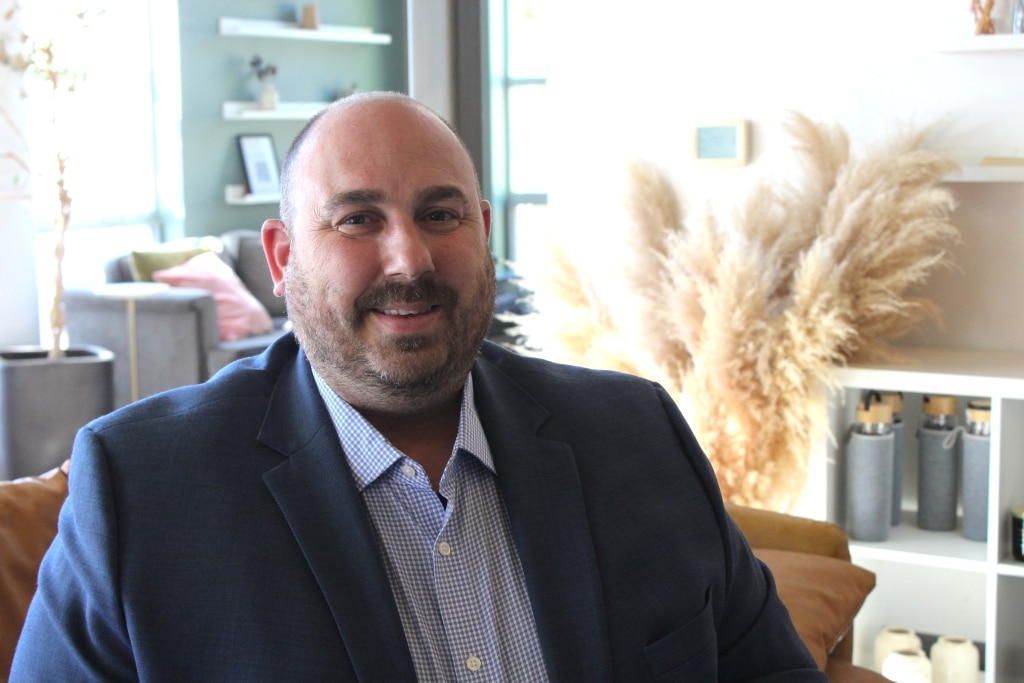
Nine candidates are running for three open seats on the Redding City Council in the upcoming November midterm election. Shasta Scout interviewed the candidates, including mobile crisis clinician Paul Saulsbury.
Interview questions were inspired by a reader survey that asked participants to identify their top priority issues along with questions they want answered. Each candidate was asked the same questions, and they were asked to keep their answers concise and to the point.
What personal or professional qualifications have prepared you for the role of city council member?
Saulsbury said he has a bachelor’s degree in communication studies with an emphasis on public affairs from Chico State and a master’s in psychology from Simpson University.
He was also both a flight attendant and a flight attendant instructor, work that’s regulated by the Federal Aviation Administration, he said, meaning he had to make his documents and reports as accurate as possible.
“When it comes to professional experience, I have a lot of real-world, real-life experience,” he added.
He’s now a mobile crisis clinician, responding to situations involving individuals with severe mental health challenges, often alongside law enforcement and firefighters. For his job, he also interacts with hospital staff, business owners and community organizations, such as Good News Rescue Mission and Visions of the Cross.
“I have a pretty good understanding of how systems work and the importance of clear communication,” Saulsbury said.
Why should the public trust you as a leader, and how would you approach issues of transparency, conflict and decision-making processes?
Saulsbury said there needs to be greater accountability not just in the city, but also within the county government and for anyone who’s placed in an elected position. He said transparency looks like admitting when a mistake is made and moving on from it.
“The community needs to be able to trust its elected officials, that what they say they’re going to do, they actually follow through and do it,” he said. “But more importantly that there’s a level of transparency there with the decision making, that the general public is aware of what is going on.”
When it comes to conflict, Saulsbury said it’s OK to disagree on matters as long as common ground is found. He explained that when conflict arises and gets too political, that’s when the community starts disengaging with the government.
He also wants the public to be aware of where their tax dollars are being spent, and he introduced the idea of having a transparency website where community members can understand what’s going on with the city’s finances.
How would you work to address the city’s significant financial instability?
Saulsbury said his first plan of action is to acknowledge exactly where the city is financially. He mentioned issues he considers warning signs, such as that the city’s sales tax revenue underperformed by nearly $3 million, and about 70% of the general fund is tied to personnel costs.
He explained he intends to control recurring expenses, closely analyzing spending on administrative costs, overtime, vacancies, contracts and more. He also wants to consider the Circle 6 Consulting report and how that can be used to improve finances, protect frontline employees like police officers, firefighters and public work employees, rebuild reserves and grow revenue without automatically raising taxes.
“We cannot cut our way to prosperity, and we cannot tax our way out of every problem,” Saulsbury said.
“Recurring expenses need recurring revenue, one-time money should not create permanent obligations, and every major expenditure should produce a measurable benefit for the people of Redding,” he said.
How would you as a council member work to provide resources for homeless individuals and ensure people have access to permanent housing?
“Because I work in the mental health field,” Saulsbury said, “I see very firsthand some of the barriers that our unhoused people are experiencing right now.”
He brought up that a major challenge for unhoused people is that their pets make it difficult for them to access services like medical care or temporary housing.
Saulsbury explained that there are pods behind the RABA bus station that he believes could be used as housing. He also said he’s interested in a program that supplies people with a backpack that can be made into a tent.
For permanent housing, he said the city should coordinate with bigger agencies to get more funding into the city. He acknowledged the difficulty some people face when needing housing, including needing to pay a security deposit, getting credit checked and showing proof of income that meets minimum income requirements, all of which can form major barriers for some individuals.
“I’d like to see city council and our board of supervisors and other agencies like probation, law enforcement, fire, EMS, to come together and collaborate ways where we could not just manage the unhoused population,” he said, “but actually reduce it and have a trend of going down.”
There are several groups that have major influence in Redding, including Bethel Church, the Redding Rancheria and the McConnell Foundation, among others. When considering any influential groups you may be involved with, how can you ensure your leadership will stay objective and not persuaded by conflicts of interest?
Saulsbury said it was important first to recognize that these organizations have a significant level of influence here, and that influence can be used for good when applied correctly in ways that benefit the community as a whole.
“When you start getting one particular organization wanting certain things to be done, regardless of how it impacts the community,” he said, “it’s tricky in the sense that you have to really think through on what is the long-term impact.”
He said it’s important for the city to have a good working relationship with the Redding Rancheria since it’s a sovereign government and to not treat it as a nonprofit or business since they have laws and regulations separate from the city. With influential groups in general, he said it’s important to have healthy communication and compromise.
“The decisions that I make [are] going to be for the best interest for the community as a whole because once you start siding with one organization or another, that’s where I feel like people can no longer feel heard or validated,” he said. “I think it’s really important to know that there is a solution for win-win situations. It’s about coming together and having that collaborative talk.”
What would your biggest priorities be if you’re elected?
Public safety is Saulsbury’s first priority. “Without safe streets and safe roads, nothing else matters,” he said.
He also wants to focus on implementing safeguards for Redding Electric Utility ratepayers, saying there have been times when the city has used REU funds for “unnecessary city projects.”
Balancing the budget is another priority, he said. He also wants to work on solutions to homelessness, saying the city needs to have both compassion and accountability. He explained that he wants to reduce the number of encampments in the city and get people connected to services quicker, adding that a challenge to be addressed is that some people can’t access services during the weekend.
Do you have a correction to share? Email us: editor@shastascout.org.
Related Articles
Special board meeting called to address ballot shredding, not subpoena, Kelstrom says
A special county board meeting scheduled for today was cancelled this morning. The meeting was intended to address next steps related to ballot shredding, Board Chair Chris Kelstrom said. Since the 2024 ballots were shredded on Saturday, no special meeting was needed.
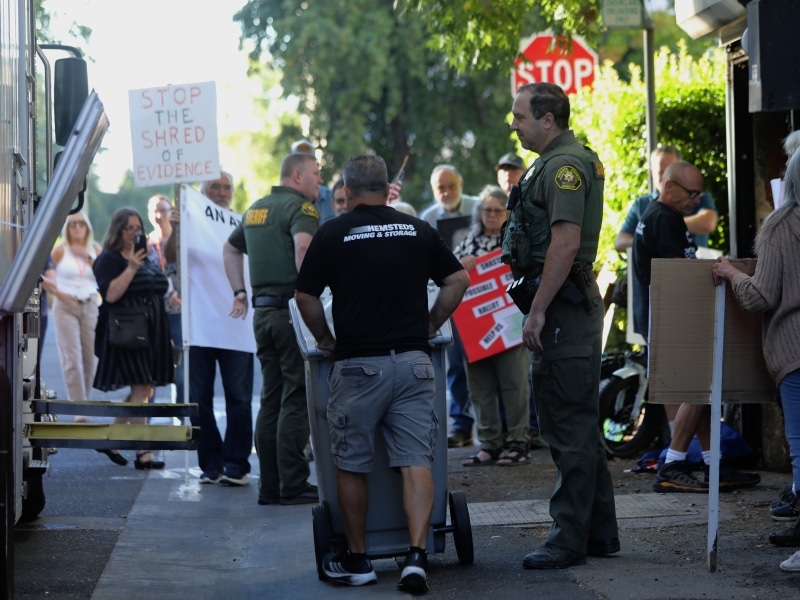
ROV Curtis oversees shredding of 2024 ballots amid activist protest
Several dozen people protested the mandatory shredding of 2024 ballots at the election office today. Amid the chaos, election official Clint Curtis supervised the proceedings with his signature cheerfulness.
Shasta County risks litigation after attempting to shield federal subpoena
The First Amendment Coalition has issued a legal demand on Shasta Scout’s behalf in an attempt to compel disclosure of a federal grand jury subpoena under public records law. A board meeting to discuss anticipated litigation is scheduled for Monday.
Comments (0)
There are no comments on this article.